Season 57 (2025-2026)
Young Frankenstein
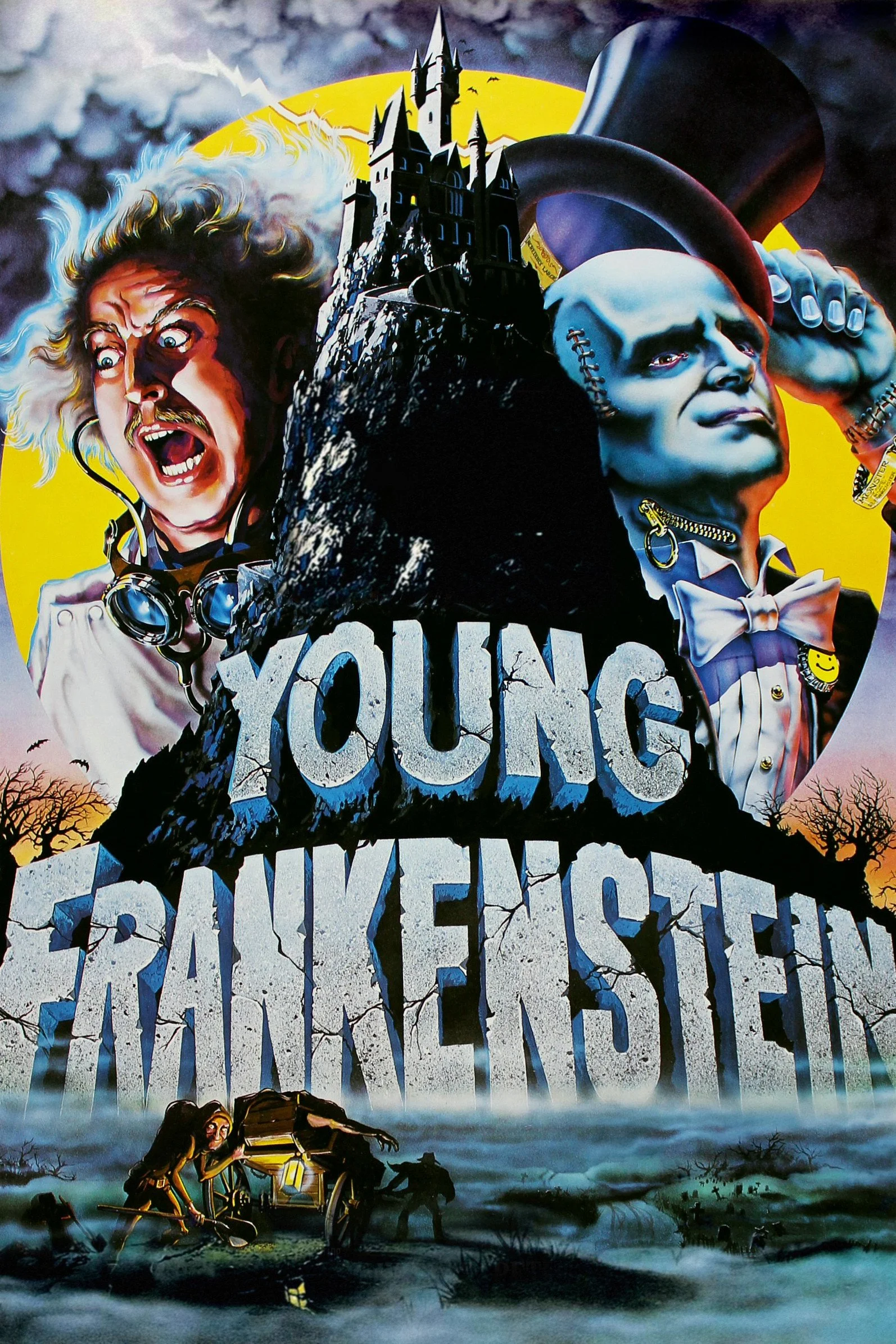
Date Shown: September 14, 2025
PG, B/W, Parody/Comedy/Slapstick, 106 min
Directed by Mel Brooks; Starring Gene Wilder, Madeline Kahn,
Marty Feldman, Cloris Leachman, Teri Garr, Peter Boyle
Tonight’s film is Mel Brooks’ Young Frankenstein—a brilliantly funny, affectionate send-up of classic horror that’s become a comedy classic in its own right. Released in 1974, the film parodies the 1930s Universal horror films, especially Frankenstein (1931) and Bride of Frankenstein (1935), not just in story, but in look, sound, and spirit.
It was shot entirely in beautiful black and white, with the sets dressed with some of the original lab equipment from the 1931 Frankenstein, which adds to its authenticity and homage. What makes Young Frankenstein stand out is that it’s not just a spoof—it’s a loving recreation of the genre. The sets, the music, the lighting, and even the pacing feel like a true classic horror film… and then the jokes land. Mel Brooks somewhat restrains his usual comedic pace just enough to keep the film grounded in its tribute, which makes the absurdity hit even harder.
Watch for running gags, expert use of silence and timing that prolong the laughs, and comedic use of horror tropes. (kb)
Get Out
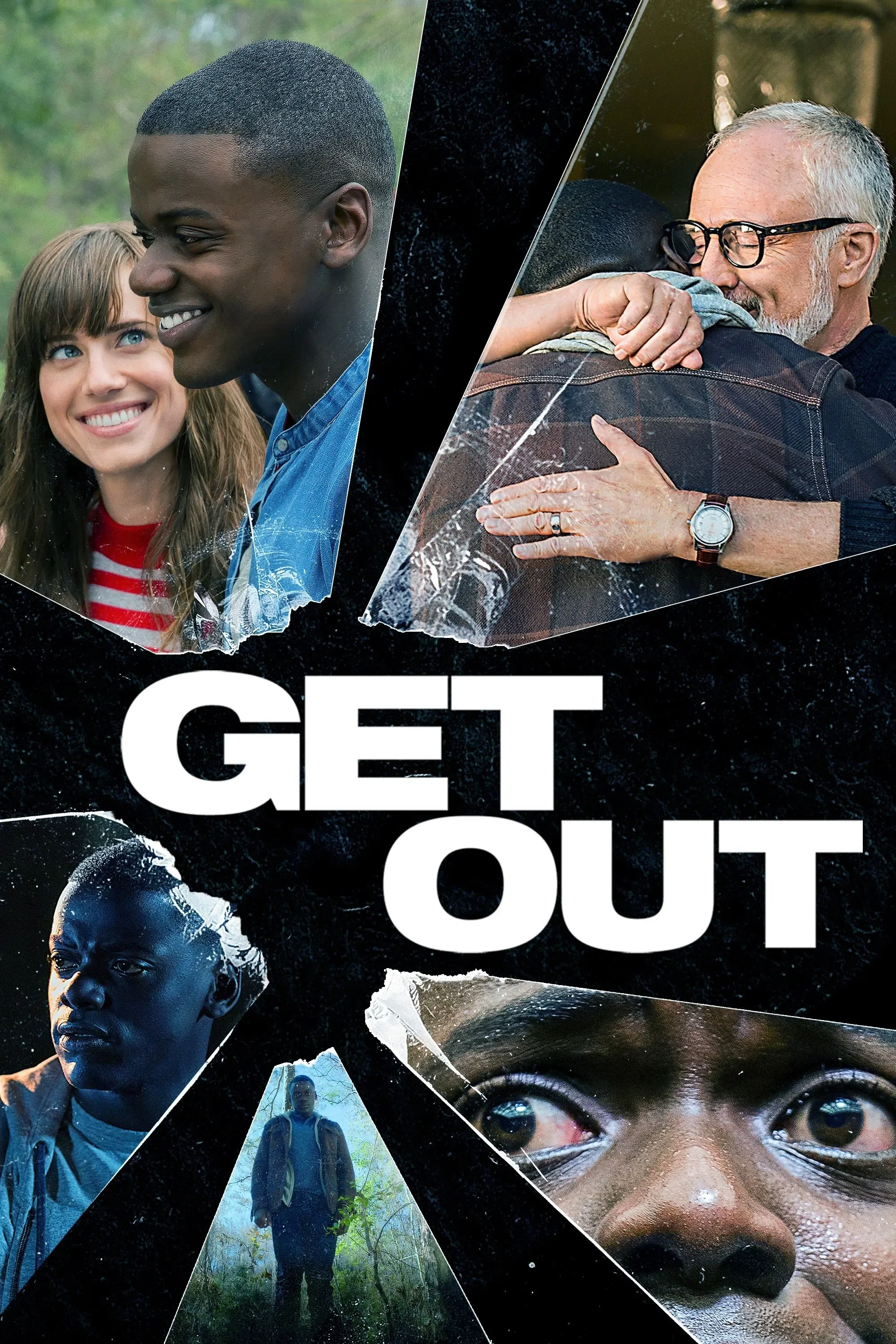
Date Shown: October 19, 2025
USA, 2017, R, Color, Psychological Horror/Suspense/Mystery, 104 min
Directed by Jordan Peele.
Starring Daniel Kaluuya, Allison Williams, Bradley Whitford, Catherine Keener
Photographer Chris Washington visits his white girlfriend Rose Armitage’s family estate for the weekend. Initially welcomed warmly, Chris begins to notice unsettling behavior from the family’s Black servants and the guests at a party. He soon uncovers a horrifying truth: the Armitages are part of a cult that transplants the consciousness of wealthy white people into Black bodies — a process called the Coagula. Chris must fight to escape before becoming their next victim.
Get Out offers the best of the horror genre. When wielded properly, horror is a highly effective way of holding a mirror to society. The worst problems our society faces should horrify us, though we are all too often numb to them.
Prior to writing and directing Get Out, Jordan Peele was squarely known as a sharp and adept comedy writer and performer. In his directorial debut, it is clear that his keen understanding of people is relevant in comedy writing, the horror genre, and filmmaking in general.
Peele made Get Out in the wake of the Black Lives Matter movement, prompted by a series of killings committed by police officers against Black men. That influence is clear here and makes for an insightful and impactful film (that just so happens to be a horror movie). (EL)
Closely Watched Trains
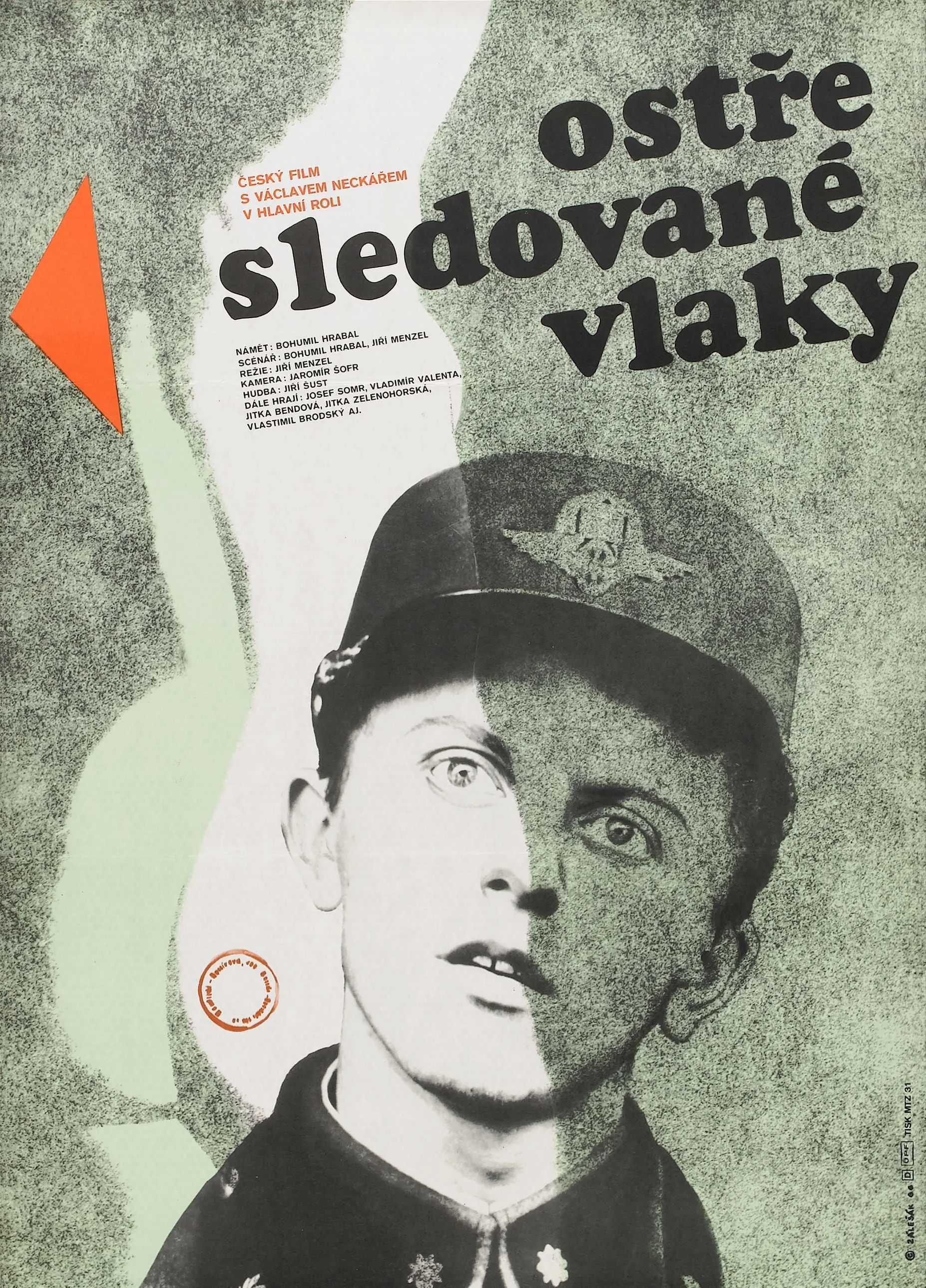
Date Shown: November 9, 2025
Czechoslovakia, 1966 — Not Rated — B/W — Satire/Drama — 92 min
Director: Jiří Menzel
Starring: Václav Neckář, Josef Somr, Vlastimil Brodský
Based on: the 1965 novella by Bohumil Hrabal
Award: Academy Award for Best Foreign Language Film (1968)
In the spring, a young man’s fancy lightly turns to thoughts of love, sex—and those damn Nazis. The hero of this wry coming-of-age tale is the peculiarly innocent Miloš Hrma (Václav Neckář), whose gentle bewilderment and sardonic self-reflection mark him as both a product and a parody of his times. He is not so much a man of action as a man adrift—curious, uncertain, and awkwardly searching for what it means to come of age amid occupation and absurdity.
Set in the waning days of World War II in German-occupied Czechoslovakia, director Jiří Menzel delivers one of the defining works of the Czechoslovak New Wave. Beneath the understated humor and pastoral setting, Closely Watched Trains reveals a quiet yet piercing meditation on love, desire, war, and the peculiar dignity of ordinary lives disrupted by history.
Among the memorable performances is Jitka Zelenohorská as the mischievous telegraphist Zdenička, whose gleefully improper testimony at a farcical inquisition steals the scene. Equally memorable is Vlastimil Brodský’s Councillor Zedníček, a pompous local Nazi sympathizer so consumed with minor scandals that he remains blind to the subversive acts of resistance happening right before his eyes.
Menzel’s genius lies in his restraint—his ability to allow setting, character, and irony to carry the story with gentle absurdism. His satire falls not on the distant German occupiers but on the homegrown collaborators who embody bureaucratic foolishness and moral blindness. The result is a film at once comic, tragic, erotic, and humane—a meditation on youth and impotence, courage and absurdity, and the small gestures of defiance that ripple through history.
The Grand Budapest Hotel
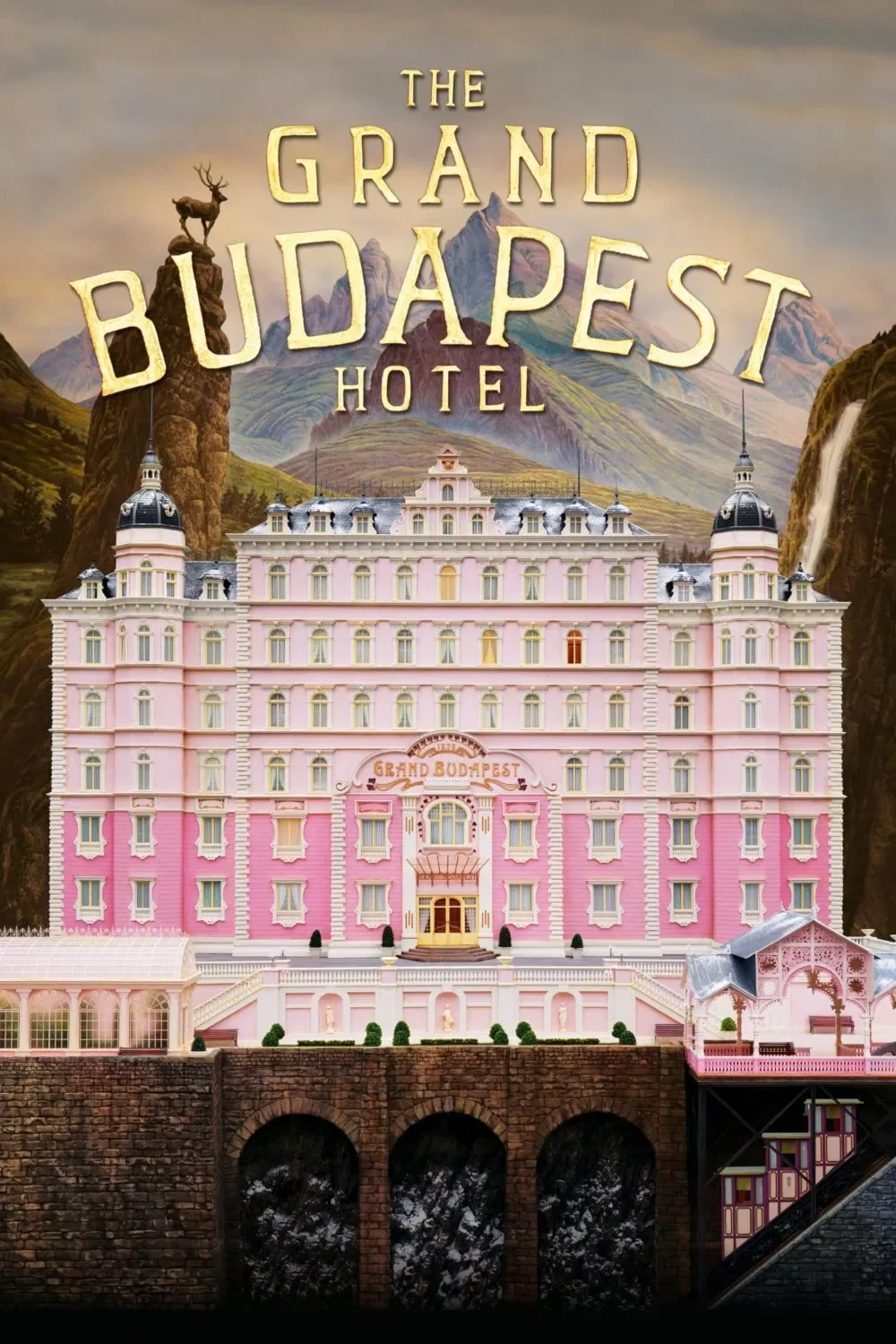
Date Shown: December 14, 2025
USA, 2014, R, Color, Quirky Comedy/Drama, 99 mins
Directed by Wes Anderson
Starring Ralph Fiennes, F. Murray Abraham, Mathieu Amalric
There are two types of people in the world: those who love Wes Anderson movies and those who aren’t worth knowing.
It’s an exaggeration, of course. But as one of the most recognizable filmmakers of the last 30 years (The New Yorker’s Richard Brody called him the greatest of his generation), Anderson is also one of the most frequently derided, typically by a subset of viewers unable to see past his diorama-like surfaces and playful artifice. Those who love him know his appeal runs far deeper.
Take The Grand Budapest Hotel (2015), considered by many to be one of his best films and the only one to earn him a Best Director Oscar nomination. Told in flashback and set in the fictional former European empire of Zubrowka, on the surface it seems like a typical Wes Anderson production – a neatly arranged slapstick comedy of manners with a cavalcade of movie stars drolly delivering arch one-liners. Behind the veneer, however, it’s a tragic and impassioned plea for the values of taste, discernment, and art in a world where such things are becoming commodities at best and, at worst, targets to be eliminated in the face of corporate, technological and political fascism.
The story centers on Zero Moustafa (F. Murray Abraham in the present, Tony Revolori in flashback), a one-time bellhop at the once-famous Grand Budapest Hotel working under the tutelage of the great concierge Gustave H. (Fiennes). M. Gustav is a man of unparalleled taste and refinement, a professional servant in every sense of the word. He sees servitude as a calling rather than a vocation, and his only objective in life is to provide experiences – including sexual ones – for the hotel’s wealthy patrons (“I sleep with all my friends,” he deadpans). One of those patrons, Madame D., dies unexpectedly and leaves him one of her most cherished and valuable paintings. When the claim is immediately contested by her hotheaded son, who frames Gustav for her murder, it sets off a madcap series of events as Zero and his mentor work to clear Gustav’s name amid the backdrop of an encroaching fascist takeover.
Anderson’s politics in the film are not subtle, and those seeking parallels to current events don’t need to look far. Beyond the obvious political allegory, however, there is another lens through which The Grand Budapest Hotel achieves an aching poignance in 2025.
The age of user-generated content (via YouTube, TikTok, and various social channels) has transformed and, in many ways, destroyed the role of tastemakers while spurring a revolution in the democratization of creativity. The rapid growth of AI moves the world closer to the precipice of another such revolution. Yet as these tools continue to dominate the battle for attention spans, they threaten to diminish and destroy the very idea of personal art amid a tidal wave of impersonal, commodified experiences and “content.” We have already seen AI-generated music albums soar to the top of the Billboard charts in multiple genres. It feels like only a matter of time before AI-generated films dominate the box office.
By presenting a lament for a bygone era in The Grand Budapest Hotel, Anderson provides a stark warning for the present: unless we recognize and nurture personal art, the cultivation of taste, and the perpetuation of beauty, these things may be lost to history. And while the forces conspiring against such virtues may ultimately be too powerful to overcome, we don’t have to give them up without a fight. (MVH)
A Face In The Crowd
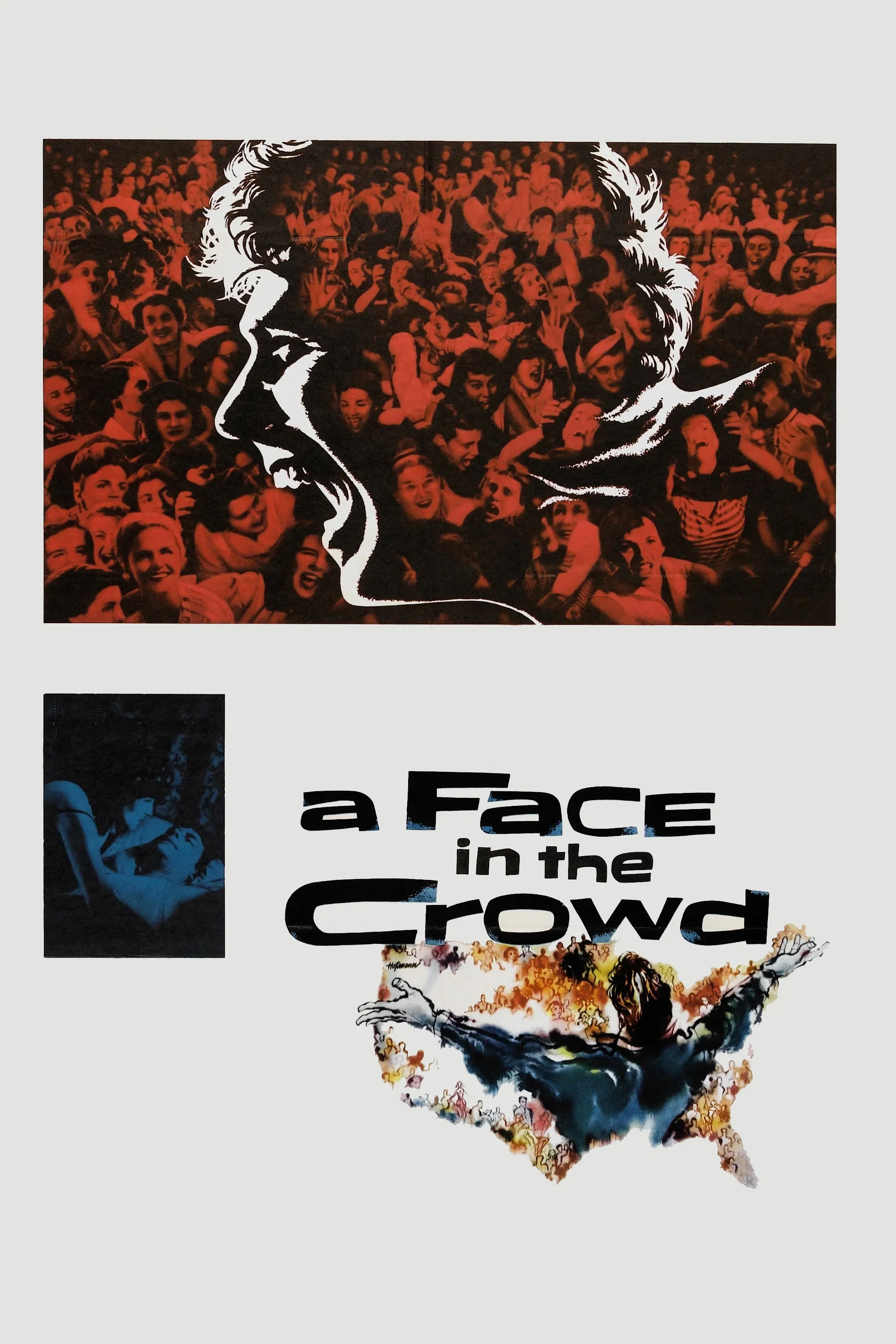
Date Shown: January 11, 2026
USA, 1957, NR, B/W, Political Drama, 126 mins
Director: Elia Kazan
Screenwriter: Budd Schulberg (based on his short story “Your Arkansas Traveler”)
Stars: Andy Griffith, Patricia Neal, Walter Matthau, Lee Remick, Anthony Franciosa
Lonesome Rhodes (Andy Griffith) is a drunk drifter, discovered sleeping off a killer hangover in an Arkansas jail by Marcia, an ambitious journalist (Patricia Neal), who's on the road to capture radio interviews with the colorful characters she meets in her travels. Marcia views Lonesome as the next Will Rogers and her ticket to the big time as her ambitions propel Lonesome into stardom, first as a radio personality, and then a national television figure. With his folksy charm, he captivates audiences—but behind the scenes, he is manipulative, egotistical, and power-hungry. The film explores the dangerous intersection of media, celebrity, and political influence.
Verbally abusive, a racist, and a womanizer, “Lonesome” sucks the air out of every room he inhabits. The public and politicians fawn over him. Marcia starts to rethink her part in “Lonesome’s” meteoric rise to this unanticipated level of power. The question arises: how do you get the genie back in the bottle? And do we want to put the genie back into that bottle?
This film was Andy Griffith's breakout role. His performance is raw, explosive, at times comedic, and at other times terrifying. This is far from the public persona Griffith created through his stage and screen roles in "No Time for Sergeants" and the much-beloved "The Andy Griffith Show."
You'll never look at Sheriff Andy Taylor the same way after seeing Griffith's star turn in this prescient and timely film. (KB)
Chungking Express
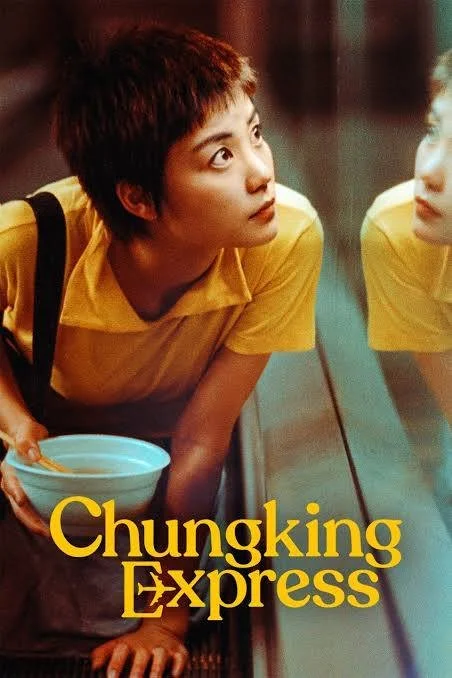
Date Shown: March 22, 2026
Hong Kong, 1994, Color, PG-13, Crime/Drama/Comedy, 102 min
Directed by Wong-Kar-wai.
Starring Brigitte Lin, Takeshi Kaneshiro, Tony Leung, Faye Wong
Released the same year as Quentin Tarantino’s Pulp Fiction, Wong Kar-Wai’s Chungking Express is a masterfully romantic and formally daring ‘90s classic, one of the most enduring of all Hong Kong films and the one that catapulted its director to the forefront of world cinema. With its inventive juggling of disparate stories and timelines, it’s easy to see why Tarantino was enamored with the film and championed its release stateside.
Set in then-present-day Hong Kong, the film features two superficially connected stories centered on the theme of romantic longing and missed connections.
In the first, heartbroken Hong Kong police officer He Zhi Wu (Takeshi Kaneshiro) is recovering from a traumatic breakup with his girlfriend when he encounters and becomes infatuated by a mysterious woman in a blonde wig (Brigitte Lin), who we soon learn is in trouble with the drug underworld.
The second story focuses on another police officer, Cop 663 (Tony Leung Chi-wai), also dealing with a bad breakup with his flight attendant girlfriend. Visiting the same food store that He Zhi Wu frequents, he becomes the secret object of affection for Faye (Faye Wong), one of the store’s workers, who takes it upon herself to break him out of his funk and help him re-enter his life.
Chungking Express builds a wonderful rhythm out of its repeating motifs and Western-infused soundtrack, with impressionistic cinematography that brings to mind the early works of Jean-Luc Godard. It doesn’t hurt that the film is populated by some of the most beautiful people world cinema has ever given us. Kaneshiro and Leung are appropriately lovelorn as the sadsack policemen, while Brigitte Lin is mysteriously sexy as the in-too-deep object of affection. The real find of the film, however, is Faye Wong, whose energetic performance and “manic pixie dream girl” energy recalls Shirley MacLaine’s enchanting debut in Hitchcock’s The Trouble With Harry.
More than 30 years since its debut, Chungking Express remains a romantic blast, an effervescent classic of second-wave Hong Kong New Wave cinema and a joyful valentine to lovesick dreamers the world over. (MVH)
El Mariachi

Date Shown: March 8, 2026
1992, Color, R, Mexico, 81 mins
Directed, Written, and Produced by Robert Rodriguez
Starring Carlos Gallardo, Consuelo Gomez, Peter Marquardt
In a previous century, a young man with a dream and a relatively small amount of cash, journeys to a border town. He then makes a movie about a young man with a dream and a relatively small amount of cash that journeys to a border town. Both young men have a noble goal, a passionate heart, and a story.
A young vagabond musician, El Mariachi (Carlos Gallardo), is mistaken for the nefarious Azul (Reinol Martinez), both of whom are new in town. Both have important plans to enact. Both carry important tools of their respective trades in a guitar case. Both young men fall under the spell of Dominó (Consuelo Gomez), a mysterious raven haired, dark eyed beauty. What follows is an entertaining story of coincidences, mistaken identities, gun fights, romance, and heartbreak.
Sometimes, in pursuit of the desires of our heart, the path is frustratingly winding, we may even hit a dead end. When our innocent Mariachi hits his dead end, he’s all, “Now I am become Death, the Destroyer of Worlds.” Because this is a movie, and movies can be that way. Rodriguez follows no rule for the peak of a distribution dictating his protagonist’s character arc. Therefore, an unexpected pivot in the context of an aspiring film student’s plan-as-you-go project is to be expected.
Lucky for us, in the spirit of Italian Neorealismo, when Rodriguez hit a dead end, he improvised, innovated, and maximally utilized all available resources. He produced an energetic, perhaps a bit campy, but a thoroughly enjoyable watch. One can imagine a 23-year-old Rodriguez as a headstrong, serious filmmaker. His earnest commitment to his film compels us to pardon his unintentional tropes or contrivances. Rather, we can appreciate that he is telling his story in the way an idealistic young man would.
What are we to make of this young man with a dream? Unlike the afore-referenced Bhagavad Gita, Rodriguez’s film is not an attempt to express non-doctrinal universal humanism. Rather, El Mariachi allows us to look through our own speculative lens and abstract the passions of an emerging auteur. (PW)
A Room With A View
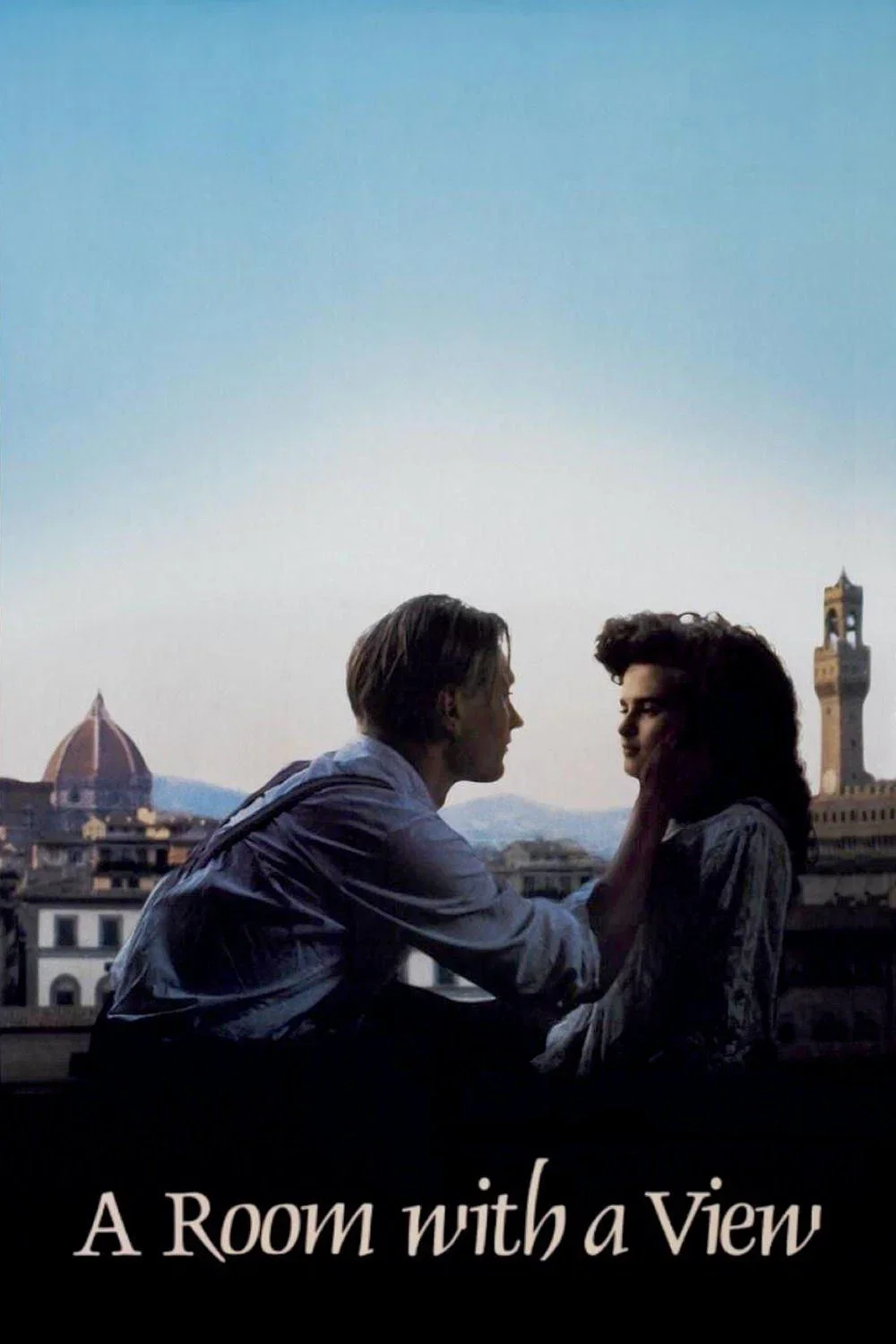
Date Shown: April 12, 2026
A Room With a View : A love story that doubles as a subtle, yet pointed, attack on the British class system.
Our protagonist, Lucy Honeychurch (Helena Bonham Carter) is an independent minded Edwardian woman who fights the battle between head and heart. On the surface, she is Edwardian perfection. She is a beautiful, serene, accomplished upper class young woman who is adept at using the womanly arts of propriety to hide her inner passions. Lucy is a skilled pianist who plays her Beethoven with stormy passion, all the while looking like a Gibson Girl.
Lucy has traveled to Florence with her older cousin, Charlotte (Maggie Smith) serving as chaperone. While there, Lucy and Charlotte encounter the Emersons, an upper middle-class father and son (Denholm Elliott and Julian Sands). Mr. Emerson is a romantic, faithfully reading his Thoreau and encouraging is son, George, who is going through an existential crisis. George is open with his passionately held views, and Lucy is unmistakenly drawn to him. But she’s also being stuffily courted by Cecil Vyse (Daniel Day Lewis), a pompous prig who’s waiting at home. What to do, what to do??
This lusciously appointed film is the first Merchant-Ivory production that Cinema, Inc has ever screened. Like all other Merchant-Ivory films, A Room with a View was shot on location in Florence and in Kent, England. The use of natural light much of the time is a common trait among all Merchant Ivory films. Each frame is composed in a painterly fashion. The art direction is impeccable. The costumes are correct. While all their films look like large budget productions, they were shot as low-budget independents. The films simultaneously appeal to the intellect, the eye, and the heart.
A Room with a View was nominated for 8 Academy Awards including acting for Denholm Elliott and Maggie Smith, Best Picture, Best Director, Best Art Direction (won), Best Adapted Screenplay, (won), Best Cinematography, and Best Costume Design (won).
If this is your first venture into the Merchant-Ivory universe, we know you will enjoy this eminently entertaining and beautiful film and that you will soon be seeking out others of their oeuvre (KB).
Waking Ned Devine
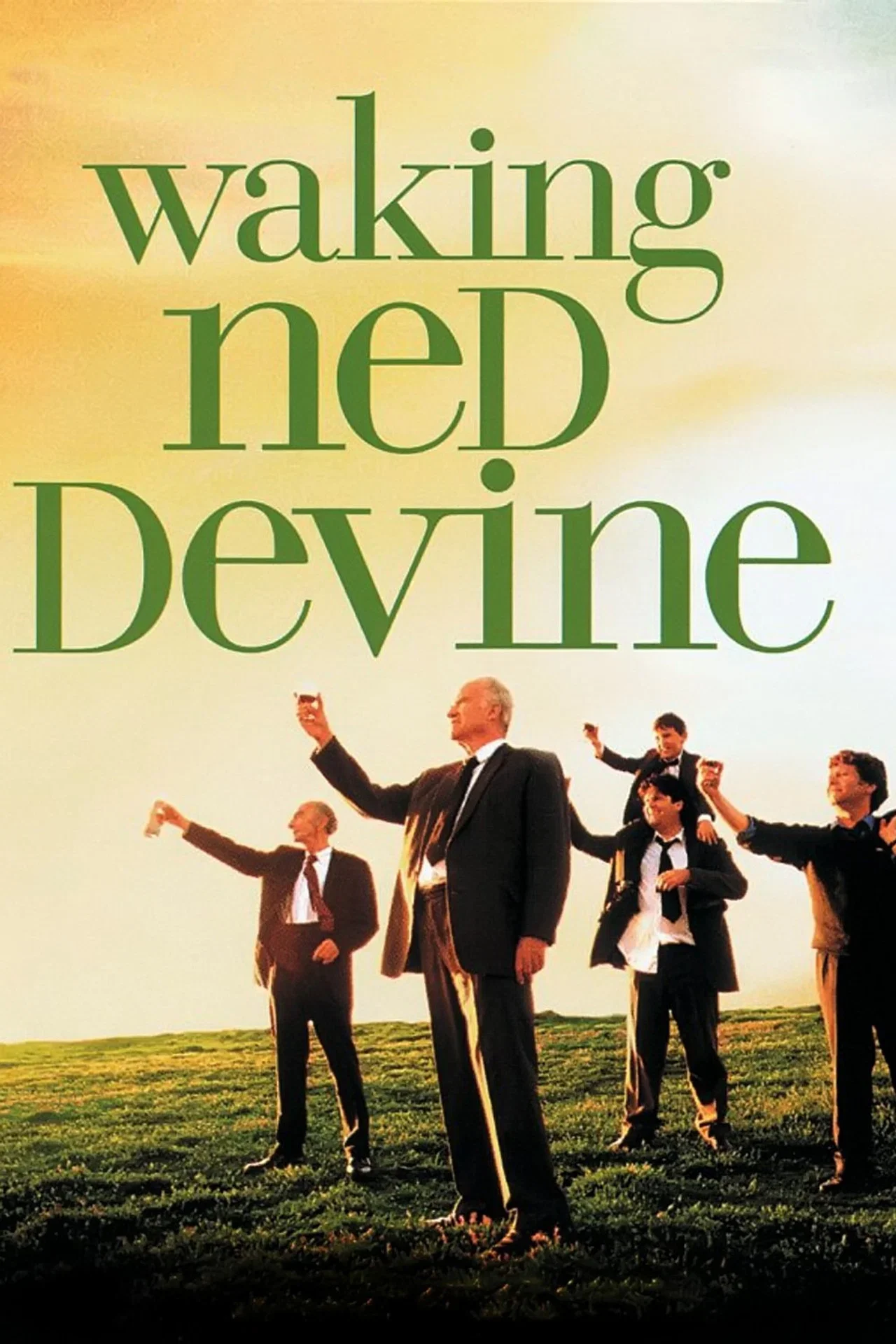
Date Shown: Sunday, May 10, 2026 @ 7pm
Ireland, 1998, PG, Color, High-Concept Dark Comedy, 91 min
Directed by Kirk Jones; Starring Ian Bannen, David Kelly, Fionnula Flanagan
I hate to lead with a spoiler, but the baby daddy gets revealed in the end.
Waking Ned Devine provides us with a glimpse into the species curmudgeon and their sub-species codger. More crotchety than cantankerous, when a curmudgeon meets up with a codger in the wild, the conniving will commence. A pinch of shenanigans, a dash of high jinks, fold in a few more roustabouts and our half-baked conspiracy comes out of the oven with enough down-home goodness to provide the whole tiny hamlet of Tulaigh Mhór with comfort food for the rest of their lives. Let the pints of Guinness flow!
Tulaigh Mhór rests upon the headlands of Ireland’s rocky coastline. The villagers, each rather busy building a life for themselves, find out that one of their own holds the winning ticket to the multi-million dollar national lottery. As they all scramble to figure out the winner, Jackie O'Shea (Bannen), Michael O’Sullivan (Kelly), and Annie O’Shea (Flanagan) come up with an ingenious plan to ferret him/her out. Winner, winner, chicken dinner.
What might at first look like self-interest quickly becomes a community effort when it’s revealed that the ticket holder is the very recently deceased Ned Devine. A dead Ned just won’t do. With the attitude that ‘everybody gets at little so that all of us get a lot’, the villagers agree to a bit of deception to claim the winning proceeds. There is one holdout. One angry, greedy, ornery little holdout - but she’ll get hers, just wait.
Waking Ned Devine is warm-hearted entertainment, but it’s also a story about people who care about each other, about life-long friends who wanted better for the people in their lives, and about what it means to remember your community and those who have passed on from it. Have a pint with a friend sometime soon. (PSW)
Junebug
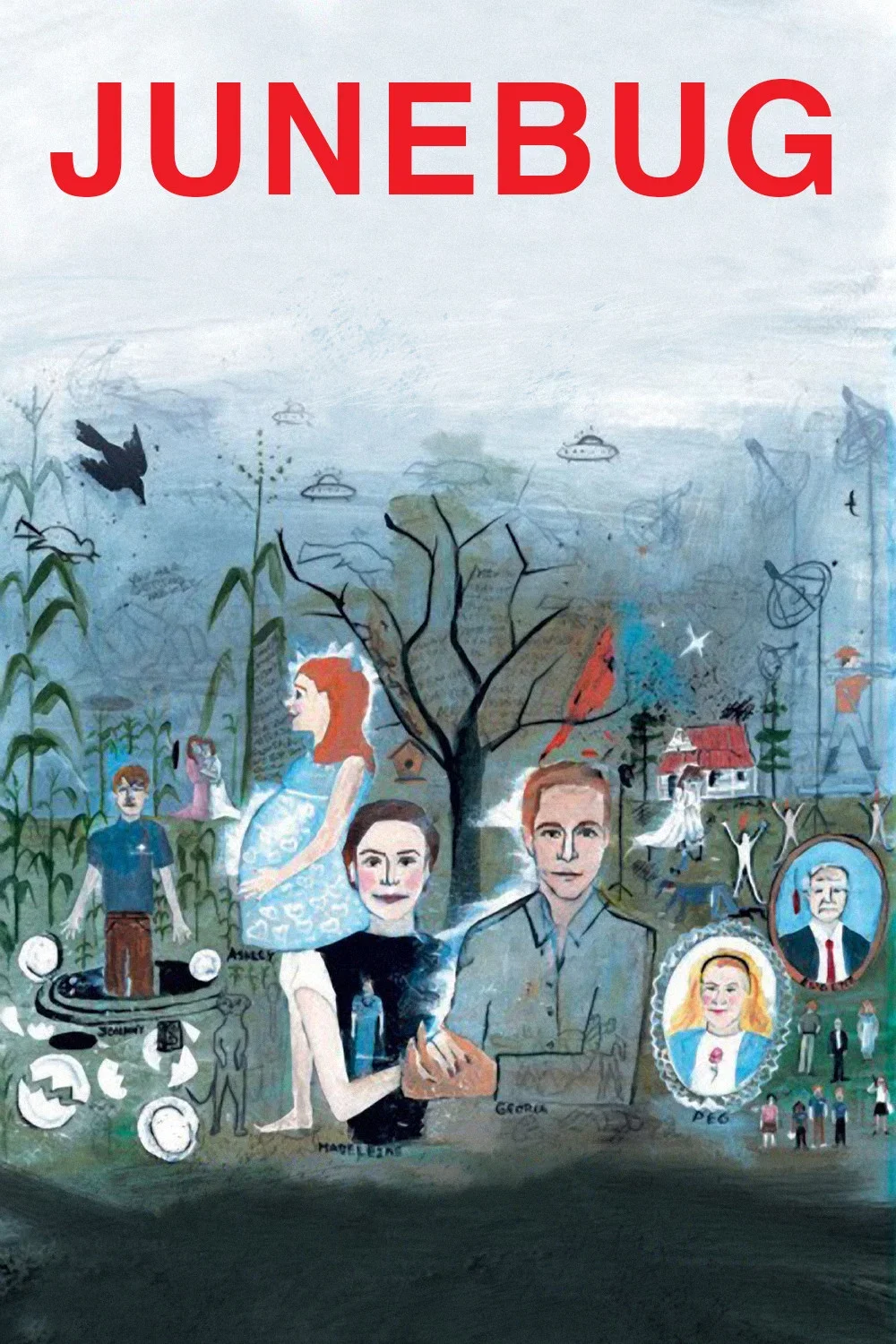
Date Shown: Sunday, June 28 @ 7pm
USA, 2005, R, Color, Drama/Dramatic Comedy, 106 min
Directed by Phil Morrison; starring Embeth Davidtz, Alessandro
Nivola, Amy Adams, Ben McKenzie, Celia Weston, Scott Wilson
From his grave, Thomas Wolfe warned us all…You Can't Go Home Again. Alas, this lesson will be reinforced for young George (Nivola). George, the favorite son, first appears to float through life as though he has no personal baggage, only to expose that he’s kept it all in storage deep in rural Carolina (if you aren’t from here, it doesn’t matter which one).
George ventures home from the Chicago art scene to the rural south with his very refined bride of six months, Madeleine (Davidtz), to meet his down-home family. Awkwardness doesn’t necessarily ensue so much as it occasionally stumbles into the room unannounced and overly familiar.
As we enter this study in dichotomy, George’s family consists of sullen younger brother Johnny, (McKenzie), smokes-in-the-house-momma Peg (Weston), dad-of-few-words Scott (Wilson), and sweet young, pregnant sister in-law Ashley (Adams). They are George’s very complicated group of baggage handlers, but they are all so very normal.
Layered into the dichotomy are the two very different young brides, Ashley and Madeleine. They are each smitten with and devoted to their husbands. As if in opposition to their very existence, mother-in-law Peg has harsh judgements for them both. Peg is never wrong, her grievances always just. But Peg, as abrasive as she comes across, is lost in her own winter of discontent. Peg is balanced by her salt of the earth husband, Eugene, and his comforting presence. Every bride needs a Eugene. The man’s thoughts and feelings are an open book, yet he is perpetually silent.
Junebug asks us to confront the way in which society passes judgment. Sometimes, some people (not us, surely not us) have a way of negatively judging young pregnant women in certain circumstances. Ashley’s hopefulness and optimism can be dismissed as naiveté about her own “bad” decisions. We may comfortably pass judgement on sullen brother’s actions and attitude because he is clearly not ready for marriage, children, or even adult life. Johnny is trying hard in his own way and seems to have no real guidance from his family.
Yet, will we use the same negative lens to scrutinize the actions of older brother George and his sophisticated, accomplished, well-educated bride? They married within a week of their first meeting / sexual encounter. Is it love at first sight? Or is it an ambitious pair of self-absorbed young people that go after what they want in the moment? For land sakes, she didn’t know he smokes or that he sings 19th century Methodist hymns with the voice of an angel. Elegant Madeleine, ever gracious and genuine does seek to belong to her new family. And George, does he deserve his seat at the golden-child throne, or was he just lucky with genetics and birth order? Will there be true equality for George and Madeleine at this table of judgement?
In lieu of expository dialogue, director Phil Morrison uses close shots of faces to tell the story that words will not. He conducts each character’s solo of good intentions but stops just short allowing them to harmonize. The volume he gives voices in the background play as though we are hearing our own memories. There is a tone that echoes within the words left unsaid. You can’t just simply go home again.
La Dolce Vita

Date: Sunday August 9, 2026 at 6pm
Italy, 1960, B&W, Not Rated, Satire/Comedic Drama, 175 min
Directed by Federico Fellini
Starring Marcello Mastroianni, Anita Ekberg, Anouk Aimée
So many movies are as disposable as Kleenex, often forgotten by the next morning. Others grab you by the collar, immerse you in the moment and ignite your imagination not just while viewing, but over the next few days, weeks, years, decades. Of their time, yet continuing to speak to the present moment, they demand and reward rewatching, offering new layers, insights, perspectives. With each screening, you discover new depths in what for many has become a cinematic talisman. Such a film is Federico Fellini’s La dolce vita.
Often accompanied by a grumpy little photographer named Paparazzo (the source of our now familiar term paparazzi), a handsome, womanizing, indolent gossip columnist with half-baked dreams of being a renowned author, Marcello Rubini (Marcello Mastroianni) pursues La dolce vita—the sweet life—among the rich and famous and the wannabe rich and famous. In a series of interrelated, short story-like episodes, Marcello wanders the heights and depths of the glamorous, decadent world of celebrity culture where fame for fame’s sake is the only goal.
Along the way, are moments of comedy and tragedy, the sacred and the profane, the sublime and the utterly ridiculous, mixed together into an alchemical potion leading to cinematic magic. La dolce vita contains scenes that have left their mark on countless movies and moviemakers who came after. People who have never seen the film can picture Anita Ekberg splashing in the Trevi Fountain or a statue of Jesus floating over the city. Without having set foot in Italy, let alone studied its language, folks can translate La dolce vita. Google the phrase and you will find pizzerias and bakeries and restaurants and salons and online shoe stores and…
La dolce vita made Marcello Mastroianni a star, wearing dark glasses at night a thing, sneaking into fountains common, the term “Felliniesque” part of the lexicon along with the aforementioned “paparazzi.”
Come, join us and taste La dolce vita for yourself. (bc)
Popstar - Never Stop Stopping

Date: Sunday August 23, 2026 at 7pm
Color, Rated R, Mockumentary/Raunchy Comedy with Music, 87 minutes
Directed by Akiva Schaffer, Jorma Taccone
Starring Andy Samberg, Akiva Schaffer, Jorma Taccone
When the sequel to Rob Reiner’s This Is Spinal Tap! was released in 2025, it received polite but less-than-enthusiastic reviews and a polite shrug from audiences. It was clear that, while not a disaster by any means, Spinal Tap II was simply too little, too late. What many viewers may not realize, however, is that a nearly perfect sequel to Spinal Tap! does exist. It’s called Popstar: Never Stop Never Stopping. Rather than a direct follow-up, this below-the-radar comedy is an obvious homage that’s a howlingly funny picture in its own right.
Popstar is the second feature from The Lonely Island, the comedy trio of Andy Samberg, Akiva Schaffer and Jorma Taccone, who emerged in the early 2000s as Saturday Night Live writers and released their first film, Hot Rod, in 2007. It’s a natural evolution of their SNL “Digital Short” series of viral music videos that established the group among the decade’s smartest pop satirists (popular favorites include “I Just Had Sex,” “I’m On a Boat” and…this one). Samberg plays Conner 4 Real (Samberg), a Justin Timberlake-modeled pop singer who rose to fame as a member of boy band “The Style Boyz” (with Schaffer and Taccone) but has recently set out as a solo artist. We meet Conner as he begins the tour for his new record, Connquest, and the film mockumentary soon grows into a gleeful mockumentary send-up of pop industry trends circa 2016, from celebrity activism to online oversharing to invasive sales gimmicks (anyone who remembers U2’s Songs of Innocence being force-downloaded onto listeners’ iPhones will feel a pang of recognition). And true to Lonely Island form, the film is wall-to-wall with celebrity cameos, from music industry luminaries to comedy legends (a personal favorite is when one SNL vet pops up as a roadie with an extremely peculiar hobby).
If Popstar were only funny – and it is, riotously so – then that might be enough to make it an enjoyable 90 minutes. What sets it apart as an underappreciated classic (the film earned a paltry $9.68 million at the box office) is its razor-sharp satire and general good nature. The humor is raunchy and vulgar without ever becoming mean-spirited, and Conner himself is an endearing hero who is frequently the butt of the joke. And regardless of one’s affinity for pop music, it’s undeniable that the film’s utterly ridiculous songs are surprisingly catchy and a near-perfect approximation of chart toppers from their era.
It all results in a movie that remains criminally underseen but proudly carries the legacy and anarchic spirit of Spinal Tap into the 21st century. It’s one of the funniest comedies of the 2010s and, with any luck, may one day achieve the cult status Reiner’s classic deservedly holds. (MVH)